Arahina Mansion Seismic Testing and Assessment
Key Services
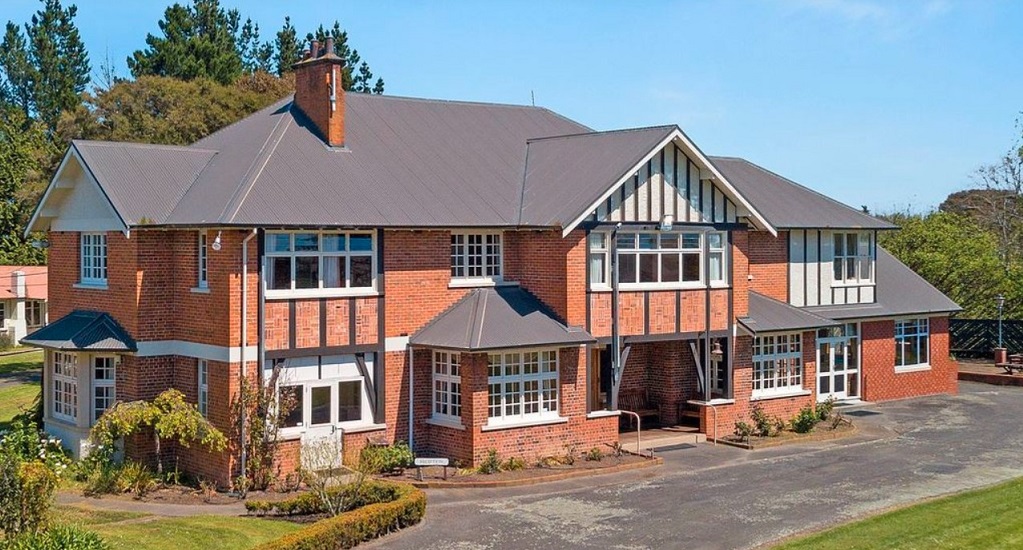
The Arahina Mansion stands as a significant heritage property, originally constructed in 1919 for Alfred Crooke, a retired magistrate. Formerly known as Astolat, the red brick residence forms part of a Heritage New Zealand Pouhere Taonga historic area.
Our team undertook in-situ testing to better understand the seismic performance of the building’s unreinforced masonry (URM) walls and to support Miyamoto New Zealand in developing an appropriate seismic remediation strategy while maintaining the building’s heritage value.
We began with an initial site inspection, identified suitable test locations, and developed a site-specific safety plan to ensure safe and efficient work within the constraints of the heritage structure.
To assess out-of-plane (OOP) wall behaviour, we designed and implemented a bespoke airbag testing setup tailored to the building. We established reaction frames on site and completed two airbag tests at separate ground floor locations. These tests evaluated the performance of both the 220 mm thick internal URM walls and the 270 mm thick cavity perimeter walls.
In parallel, we carried out material testing to determine the strength characteristics of the existing masonry. We carefully selected sampling locations and extracted brick-and-mortar specimens, including multiple samples at each location. We also conducted in-situ bed joint shear tests to assess masonry bonding performance. After testing, we reinstated all extracted areas using matching heritage bricks to preserve the building’s original character. We then completed laboratory compression testing of the samples to further inform the structural assessment.
We analysed the field and laboratory results and compiled them into a detailed report, providing a robust understanding of the building’s seismic performance. This information now informs the design of targeted seismic strengthening measures, helping ensure the long-term resilience of this important heritage asset while respecting its historic fabric.